

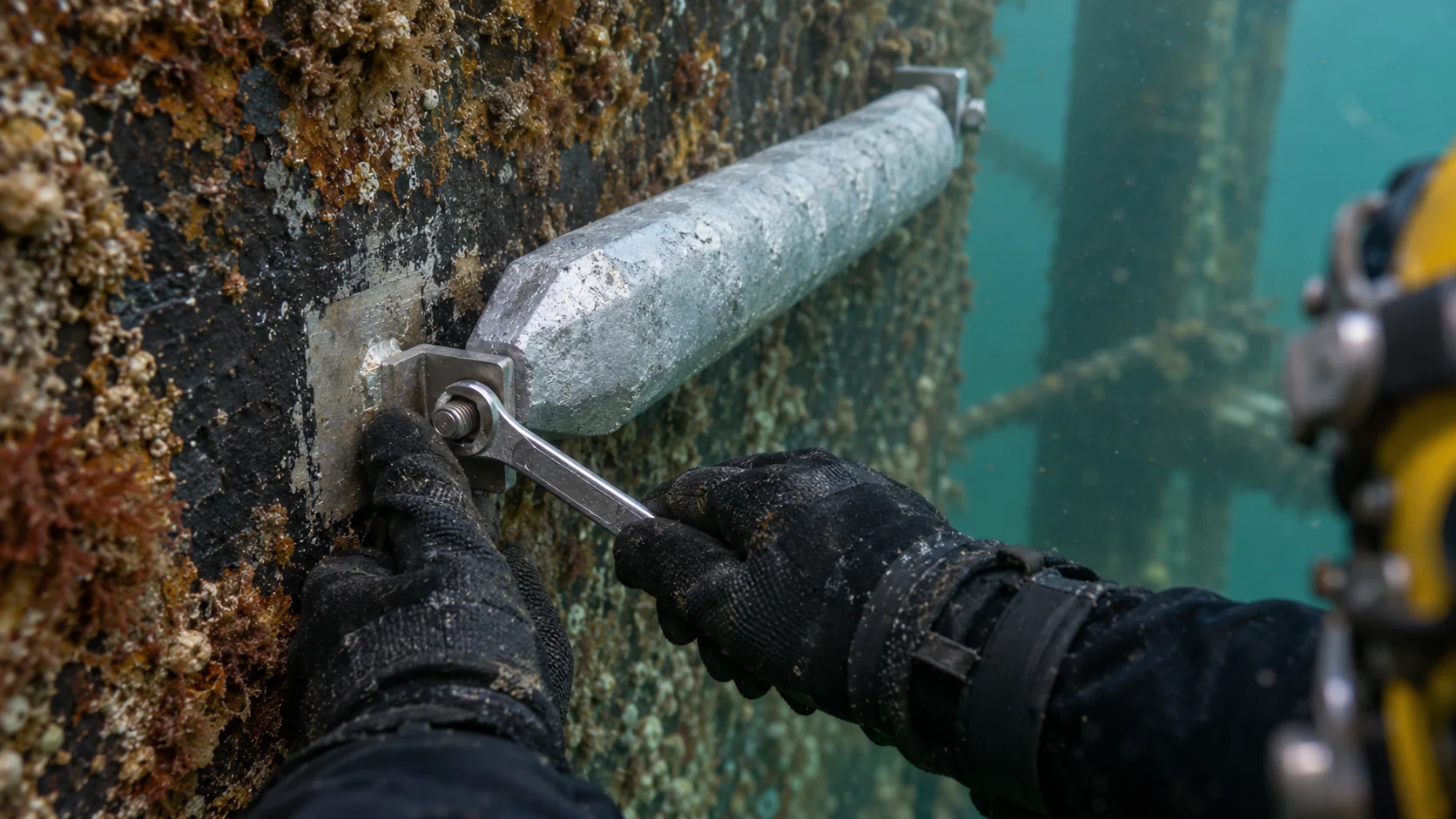
Underwater anode installation is an important part of corrosion protection for submerged steel structures in marine and offshore environments.
Sacrificial anodes are used in many cathodic protection systems to help reduce corrosion of the protected structure. During operation and maintenance, existing anodes may need to be inspected, replaced or installed at new locations in accordance with the approved engineering design.
Kalout Marine Services provides underwater anode installation as part of its marine and subsea operational capabilities.
The exact work scope depends on the asset, installation location, access conditions, approved drawings and project procedures.
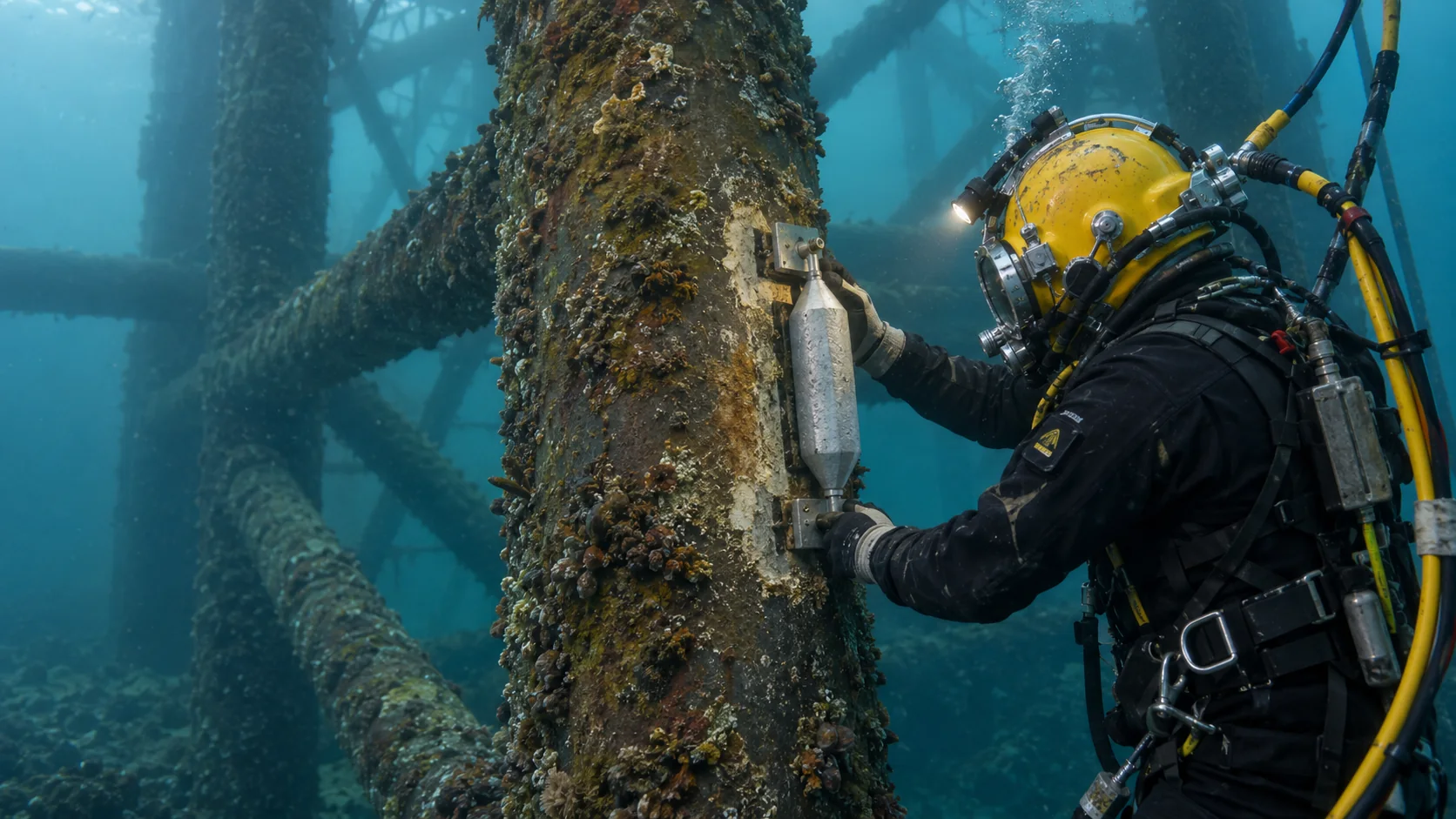
What Does Underwater Anode Installation Involve?
Underwater anode installation is the process of positioning and securing anodes on submerged metallic structures as part of an approved cathodic protection system.
The work may involve:
- Accessing the designated installation location
- Inspecting the installation area
- Preparing the location where required
- Handling and positioning the anode
- Installing or replacing the anode in accordance with the approved procedure
- Inspecting the completed installation
- Documenting the work where required
The attachment method, anode specification and installation arrangement are determined by the engineering requirements of each project.
Where Is Underwater Anode Installation Used?
Sacrificial anodes can be used on a range of submerged marine assets.
Depending on the cathodic protection design, underwater installation may be required on:
- Offshore steel structures
- Jackets and submerged structural members
- Marine piles and jetty structures
- Subsea pipelines
- Other submerged metallic structures
The specific application and work scope must be confirmed for each asset and project.
The Role of Commercial Diving
Where direct underwater access is required, commercial diving can support the physical installation of sacrificial anodes.
Divers may be involved in:
- Accessing the designated installation point
- Checking the actual condition of the installation area
- Supporting surface preparation where required
- Positioning the anode
- Carrying out the approved attachment method
- Inspecting the completed work
The diving method and operational plan depend on site conditions, water depth, access limitations and the approved project procedure.
Learn more about Kalout's commercial diving services.
Sacrificial Anodes and Cathodic Protection
Cathodic protection is used to help control corrosion on submerged metallic structures.
In a sacrificial anode system, the anode is made from a more electrochemically active material than the protected structure. The anode corrodes preferentially and helps provide protective current to the connected metal.
However, cathodic protection design and underwater anode installation are not the same service.
The following activities are part of the engineering design of the cathodic protection system:
- Selecting the anode material
- Determining the number of anodes
- Defining anode locations
- Calculating current requirements
- Establishing performance criteria
Underwater anode installation is the execution stage. It applies the approved design in the actual marine environment.
Replacement of Existing Underwater Anodes
Sacrificial anodes are gradually consumed during operation.
Where an engineering assessment identifies the need for replacement, underwater work may be required to remove, prepare or replace existing anodes.
The exact procedure depends on the structure, existing installation, attachment method and site conditions.
Before execution, the required replacement scope should be clearly defined in the approved project documentation.
Underwater Anode Installation on Subsea Pipelines
Subsea pipelines may also use sacrificial anodes as part of their cathodic protection systems.
Where underwater intervention is required, installation or replacement work must consider the condition of the pipeline, seabed environment, access limitations and operational requirements.
Anode work on subsea pipelines may form part of a broader inspection, intervention or repair programme.
For related capabilities, see Kalout's subsea pipeline services.
General Installation Process
Every project has its own requirements, but an underwater anode installation operation may generally include the following stages.
-
Technical Review
The team reviews the available drawings, anode specifications, installation locations and approved work scope.
-
Operational Planning
Access requirements, diving arrangements, safety controls and installation procedures are defined before the operation begins.
-
Underwater Access and Site Check
The installation area is accessed and the actual condition of the structure is checked.
-
Anode Positioning and Installation
The anode is positioned at the designated location and installed using the attachment method approved for the project.
-
Post-Installation Check
The completed installation is visually checked and documented where required.
This is a general operational sequence. The final method statement and work procedure must be defined for the specific project.
Technical and Operational Considerations
Underwater anode installation can be affected by several project conditions, including:
- Structure type and geometry
- Water depth
- Diver access
- Condition of the installation area
- Anode dimensions and weight
- Attachment method
- Environmental conditions
- Operational restrictions
- Safety requirements
These factors should be reviewed before the underwater work begins.
Inspection and Anode Condition
Visual inspection can help identify issues such as:
- Missing anodes
- Physical damage
- Attachment problems
- Visible material consumption
However, visual inspection alone does not confirm the overall performance of a cathodic protection system.
Electrical potential measurements, continuity checks or other specialist assessments should only be included where they are specifically required within the project scope.
These activities are separate from the physical underwater installation work.
Discuss Your Underwater Anode Installation Requirements
If your project requires sacrificial anode installation, anode replacement or related underwater intervention, Kalout Marine Services can review the available technical information and proposed work scope.
Useful information for an initial review may include:
- Asset type
- Project location
- Existing cathodic protection arrangement
- Anode specifications
- Installation drawings
- Attachment requirements
- Available inspection information
- Operational constraints
Contact Kalout Marine Services to discuss your project requirements.
Frequently Asked Questions
What is underwater anode installation?
Underwater anode installation is the process of positioning and attaching sacrificial anodes to submerged metallic structures as part of an approved cathodic protection system.
What are sacrificial anodes used for?
Sacrificial anodes are used in galvanic cathodic protection systems. They corrode preferentially and help reduce corrosion of the connected metallic structure.
Can sacrificial anodes be replaced underwater?
Yes. Where the project design and access conditions allow, existing sacrificial anodes can be replaced through underwater intervention.
Does underwater anode installation require commercial divers?
Commercial divers may be used where direct diver access is suitable. The intervention method depends on the asset, water depth, site conditions and approved project procedure.
Is anode installation the same as cathodic protection design?
No. Cathodic protection design determines the type, quantity, location and performance requirements of the anodes. Underwater anode installation is the physical execution of the approved design.